
Navigating the world of skincare can feel overwhelming, especially with the countless products and ingredients claiming to work miracles. Understanding what goes into these formulations is key to making informed choices that benefit the skin. From hydration to anti-aging, each ingredient plays a specific role in achieving that coveted glow.
This article breaks down popular skincare ingredients, shedding light on their benefits and how they interact with the skin. Whether it’s hyaluronic acid’s hydrating prowess or retinol’s anti-aging effects, knowing the science behind these components empowers individuals to tailor their skincare routines effectively. Dive in to discover how to decode labels and select the right products for your unique skin needs.
Overview of Skincare Ingredients
Skincare ingredients play a vital role in enhancing skin health and addressing various concerns. Understanding these components aids in selecting effective products tailored to individual skin types and conditions. Here’s a breakdown of common skincare ingredients and their functions:
Humectants
- Hyaluronic Acid: Attracts moisture to the skin, providing hydration and plumpness.
- Glycerin: Draws moisture from the air, aiding in skin hydration and barrier function.
- Sorbitol: Retains water in the skin, enhancing smoothness and elasticity.
Emollients
- Shea Butter: Nourishes and softens the skin, forming a protective barrier.
- Coconut Oil: Provides moisture and has antibacterial properties, promoting healthier skin.
- Jojoba Oil: Mimics natural skin oils, offering hydration without clogging pores.
Exfoliants
- Salicylic Acid: Aids in unclogging pores, effective for acne-prone skin.
- Glycolic Acid: Removes dead skin cells, promoting a brighter complexion and smoother texture.
- Lactic Acid: Gently exfoliates while providing moisture, suitable for sensitive skin.
Antioxidants
- Vitamin C: Brightens the skin and protects against environmental damage.
- Vitamin E: Provides hydration and supports skin barrier function.
- Green Tea Extract: Contains polyphenols that reduce inflammation and protect against UV damage.
Retinoids
- Retinol: Stimulates collagen production, reducing the appearance of fine lines and wrinkles.
- Tretinoin: A prescription-strength retinoid, effective for treating severe acne and signs of aging.
- Adapalene: Targets acne while minimizing skin irritation, suitable for sensitive skin types.
Peptides
- Palmitoyl Pentapeptide-4: Stimulates collagen production and improves skin elasticity.
- Matrixyl: Reduces the appearance of wrinkles by promoting cellular regeneration.
- Copper Peptides: Support wound healing and enhance skin firmness.
This overview highlights essential skincare ingredients, providing insight into their functions and benefits. Understanding these components enables consumers to make informed choices for effective skincare routines.
Common Skincare Ingredients
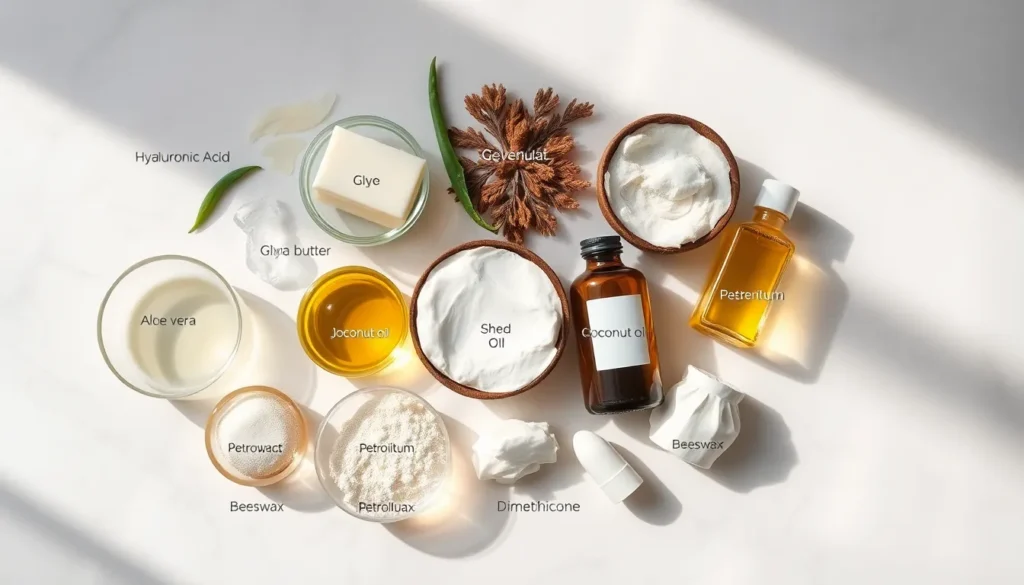
Understanding common skincare ingredients can simplify the selection process for effective products. Here’s a closer look at essential categories and their specific roles.
Humectants
Humectants draw moisture from the environment into the skin, helping to maintain hydration. Examples include:
- Hyaluronic Acid: This powerful humectant can hold up to 1,000 times its weight in water, promoting plumpness and elasticity.
- Glycerin: Known for its soothing properties, glycerin attracts moisture and supports the skin’s barrier function.
- Aloe Vera: This natural humectant not only hydrates but also provides anti-inflammatory benefits.
Emollients
Emollients soften and smooth the skin by filling the gaps between skin cells. Key emollients include:
- Shea Butter: Rich in fatty acids, shea butter provides nourishment and forms a protective barrier against moisture loss.
- Coconut Oil: This ingredient moisturizes effectively and has antimicrobial properties, making it great for dry skin.
- Jojoba Oil: Similar to skin’s natural sebum, jojoba oil helps in balancing oil production while delivering hydration.
Occlusives
Occlusives create a barrier on the skin’s surface, preventing water loss. Notable occlusives are:
- Petrolatum: A highly effective occlusive agent, petrolatum seals moisture in, making it ideal for extremely dry skin.
- Beeswax: This natural occlusive protects the skin and locks in hydration while providing anti-inflammatory effects.
- Dimethicone: A silicone-based occlusive that leaves a silky feel while creating a protective layer to retain moisture.
These categories together form a comprehensive understanding of how ingredients work to enhance skin health and hydration.
Active Ingredients
Active ingredients play a crucial role in skincare formulations, offering specific benefits that target various skin concerns. Understanding these compounds enables consumers to make targeted choices for optimal skin health.
Retinoids
Retinoids, derived from vitamin A, are powerful ingredients known for their anti-aging properties. They promote cell turnover and stimulate collagen production, leading to smoother skin and reduced appearance of fine lines. Common retinoids include retinol, which is available over-the-counter, and tretinoin, which is prescription-based. Regular use can enhance skin texture and tone, making retinoids a staple in many skincare routines.
Acids
Acids in skincare serve various functions, primarily for exfoliation and pH regulation. AHA (alpha hydroxy acids), like glycolic and lactic acid, dissolve dead skin cells and enhance skin radiance. BHA (beta hydroxy acid), such as salicylic acid, penetrates deep into pores, helping to unclog them and reducing acne breakouts. Incorporating acids into a skincare routine improves texture and promotes a clearer complexion, offering a rejuvenating effect.
Antioxidants
Antioxidants protect the skin from oxidative stress caused by environmental factors. Ingredients like vitamin C and vitamin E neutralize free radicals, reducing the risk of premature aging. Vitamin C brightens the skin and promotes a more even tone, while vitamin E enhances moisture retention and provides added protection. Including antioxidants in skincare helps maintain skin health and vitality, making them essential for daily use.
Natural vs. Synthetic Ingredients
Understanding the distinction between natural and synthetic ingredients is essential for selecting effective skincare products.
Natural Ingredients
Natural ingredients originate from plant or mineral sources. Common examples include:
- Aloe Vera: Moisturizes and soothes skin irritation.
- Coconut Oil: Nourishes and provides moisture retention.
- Tea Tree Oil: Known for its antibacterial and anti-inflammatory properties.
Natural ingredients often appeal to those preferring products free from chemicals. However, they may cause allergic reactions in sensitive individuals, making patch testing crucial.
Synthetic Ingredients
Synthetic ingredients are chemically manufactured, combining natural elements or completely new compounds. Notable examples are:
- Hyaluronic Acid: A hydrating agent that retains water in the skin.
- Retinol: An effective anti-aging compound that promotes cell turnover.
- Salicylic Acid: A powerful exfoliant that unclogs pores and reduces acne.
Synthetic ingredients often offer more consistent results and stability. However, some consumers express concerns about potential irritations or long-term effects.
Comparison
| Feature | Natural Ingredients | Synthetic Ingredients |
|---|---|---|
| Source | Derived from plants or minerals | Chemically created or derived |
| Efficacy | May vary based on sourcing | Generally consistent and reliable |
| Sensitivity Risk | Higher for individuals with allergies | Potential for irritation, but generally lower |
| Shelf Life | Shorter; often requires preservatives | Longer; typically more stable |
Choosing between natural and synthetic ingredients often depends on personal preference and skin type. It’s beneficial to consult ingredient lists and evaluate each product’s specific needs to make educated skincare choices.